INTRODUCTION TO
FOREX TRADING
Scroll down for notes
Forex is the biggest financial market in the world. It’s where currencies are bought and sold 24 hours a day, 5 days a week.
Price is moved by banks, institutions, businesses and traders like us, and every move happens for a reason.
Before you can trade it properly, you need to understand how the market works, what moves price, who is moving it, and how a trade is actually placed.
With these foundations in place, everything you learn later in the course will make a lot more sense, and you’ll know exactly what you’re looking at every time you open a chart.
WHAT IS FOREX
Forex -> Foreign Exchange -> swapping one currency for another
Biggest market in the world -> trillions traded every day
Open 24 hours a day -> 5 days a week (Sunday night to Friday night)
No central exchange -> traded between banks, brokers and traders all over the world
WHO MOVES PRICE
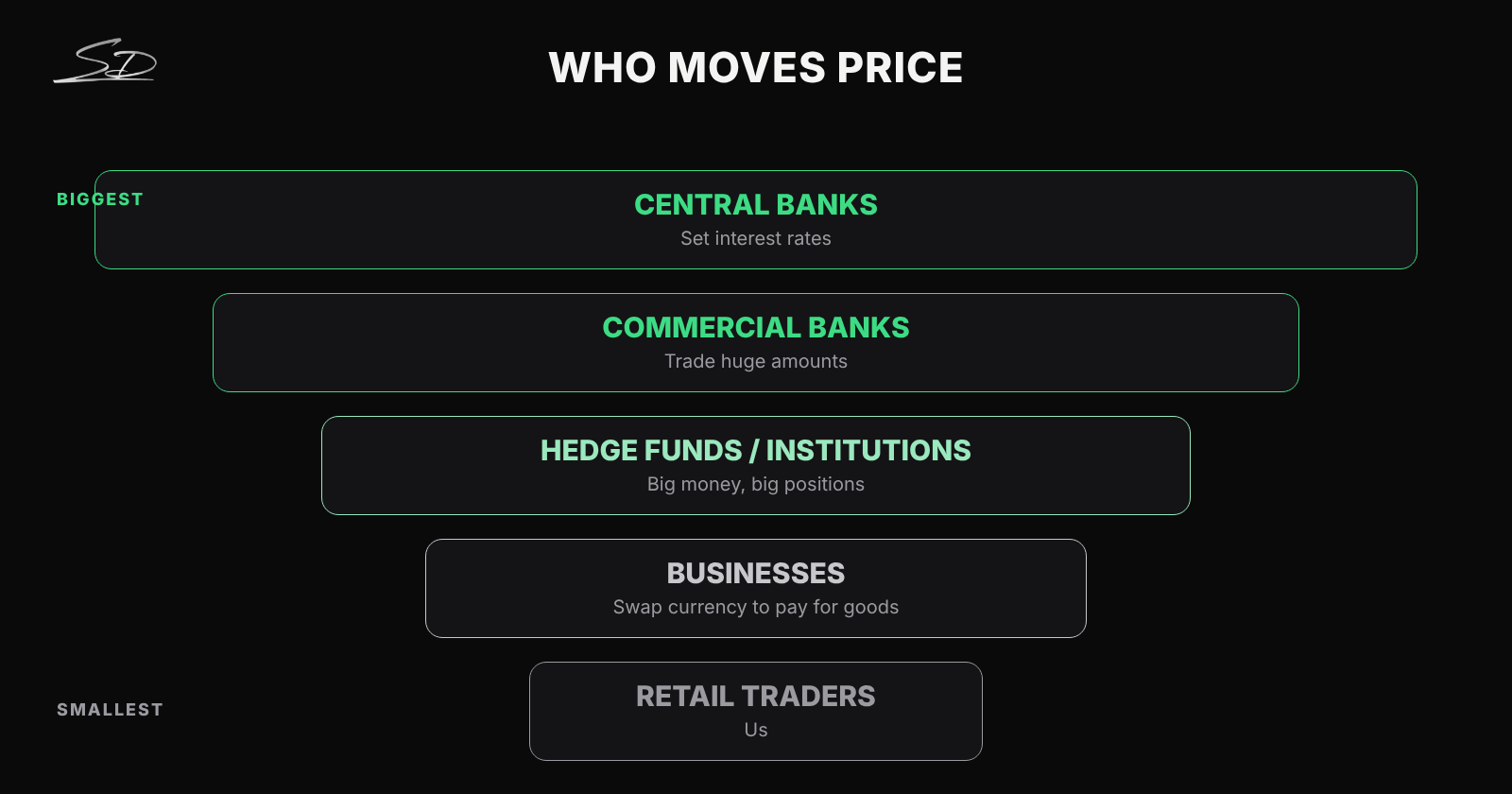
There are 5 main groups moving the market:
Central Banks -> set interest rates -> biggest influence
Commercial Banks -> trade huge amounts for themselves and their clients
Hedge Funds / Institutions -> big money, big positions
Businesses -> swap currency to pay for goods abroad
Retail Traders -> us -> smallest part of the market
Big money moves price -> we follow it, we don’t fight it
CURRENCY PAIRS
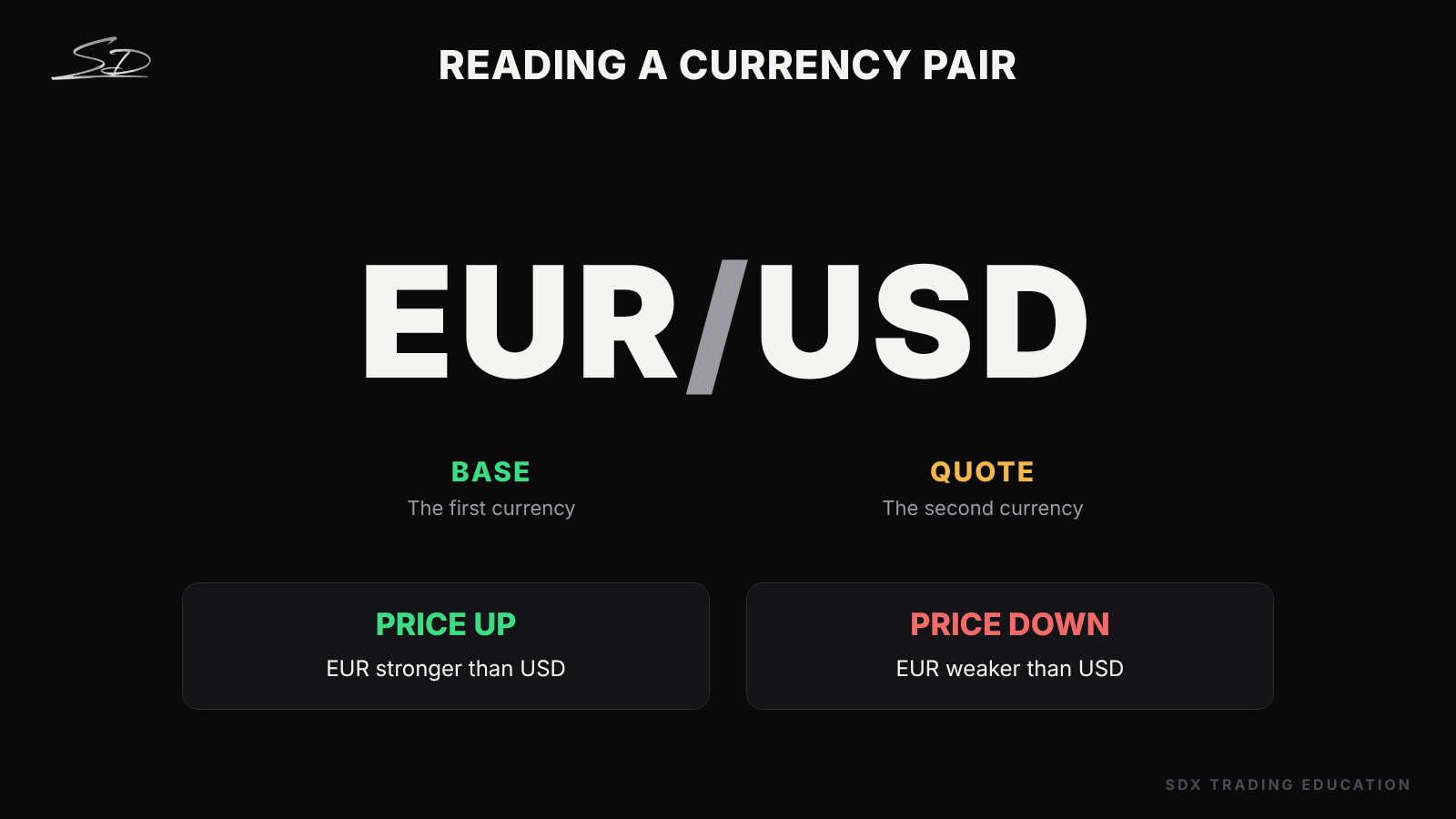
Currencies are always traded in pairs -> EUR/USD
First currency -> Base
Second currency -> Quote
EUR/USD going up -> EUR getting stronger against USD
EUR/USD going down -> EUR getting weaker against USD
There are 3 types of pairs:
Majors -> pairs with USD -> EUR/USD, GBP/USD, USD/JPY -> tightest spreads
Minors -> no USD -> EUR/GBP, GBP/JPY
Exotics -> a major currency with a smaller economy -> USD/TRY -> wide spreads, avoid
We stick to the majors
WHAT MOVES THE MARKET
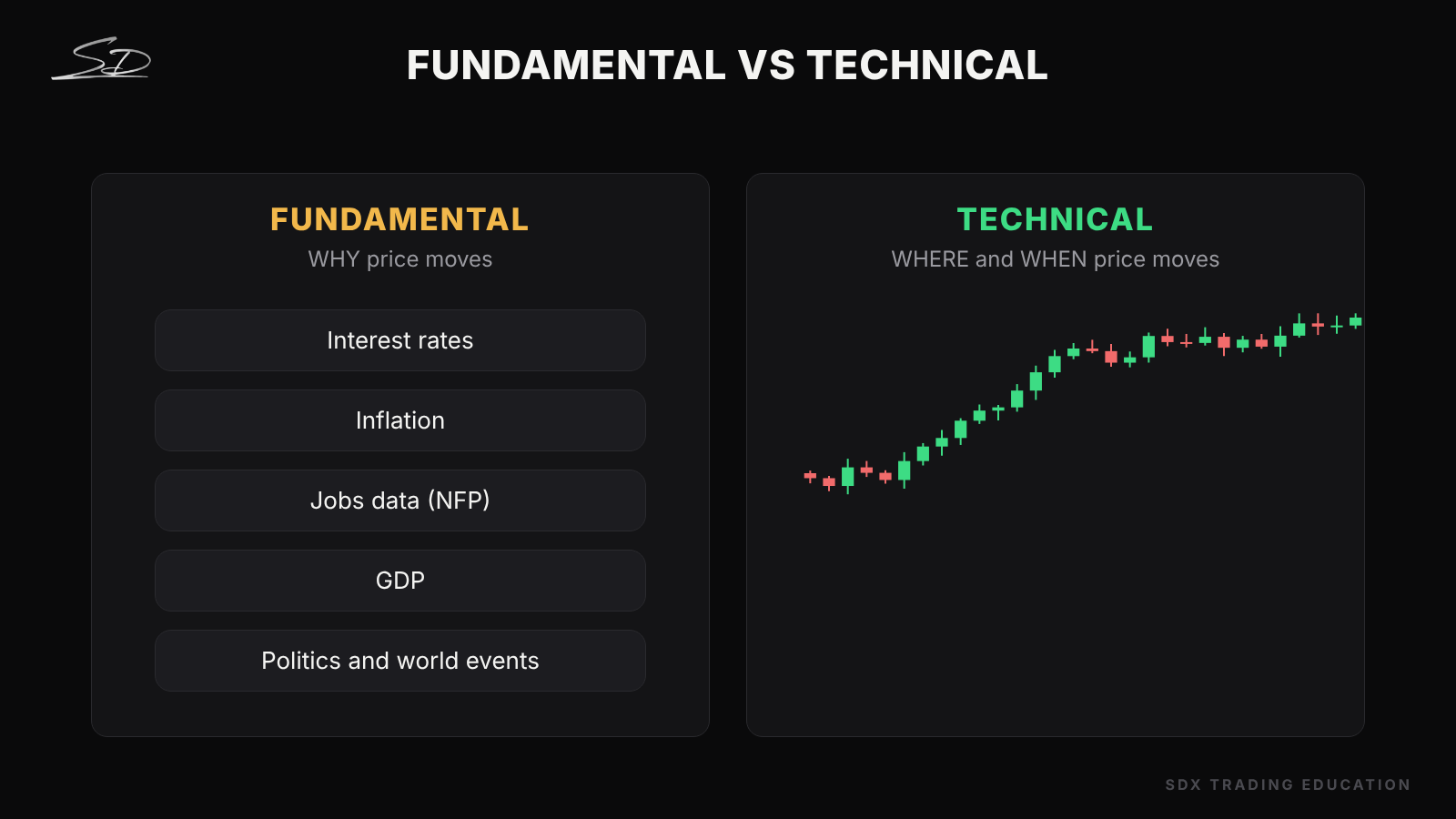
Interest rates -> higher rates usually means a stronger currency
Inflation -> how fast prices are rising
Jobs data -> NFP, unemployment
GDP -> how well the economy is doing
Politics and big world events -> elections, wars, trade deals
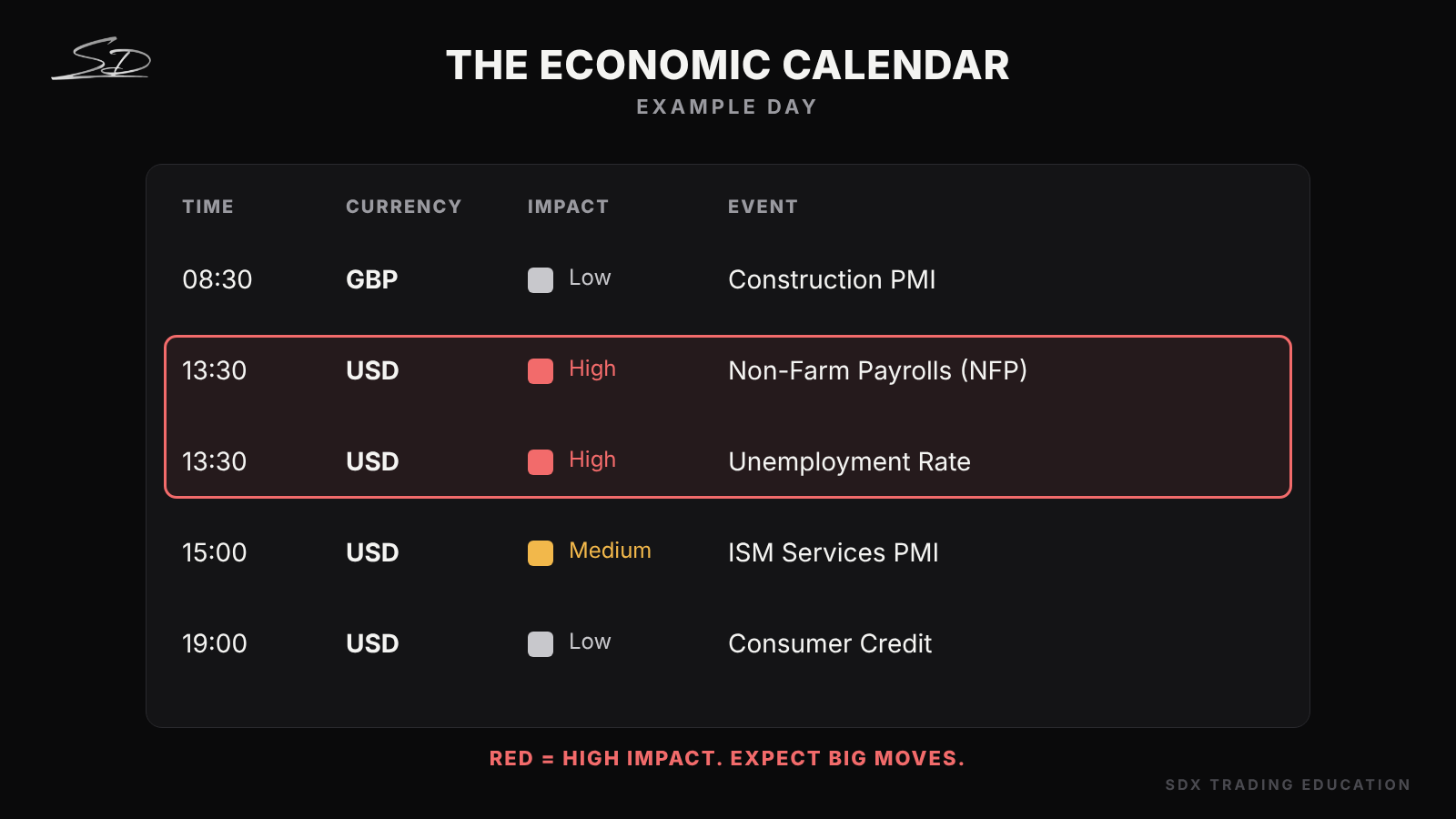
All of this comes out on the economic calendar -> check it every morning
Red folder news -> high impact -> expect big moves
FUNDAMENTAL VS TECHNICAL
Fundamental Analysis -> news, economics, interest rates -> WHY price moves
Technical Analysis -> reading the chart -> WHERE and WHEN price moves
We are technical traders -> we use the news to stay safe, not to pick trades
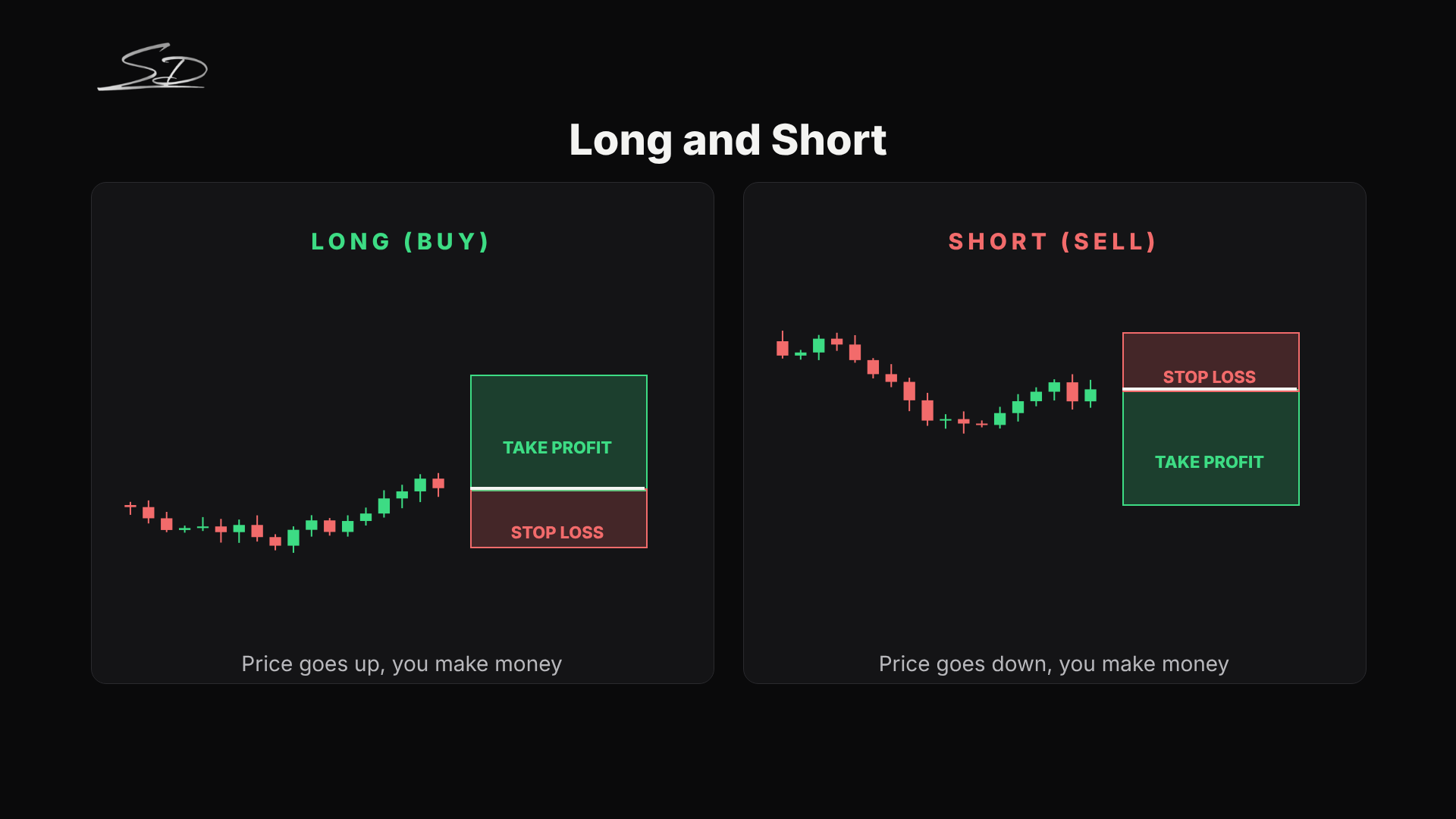
BUY AND SELL
Buy (Long) -> you think price is going up
Sell (Short) -> you think price is going down
You can make money in both directions
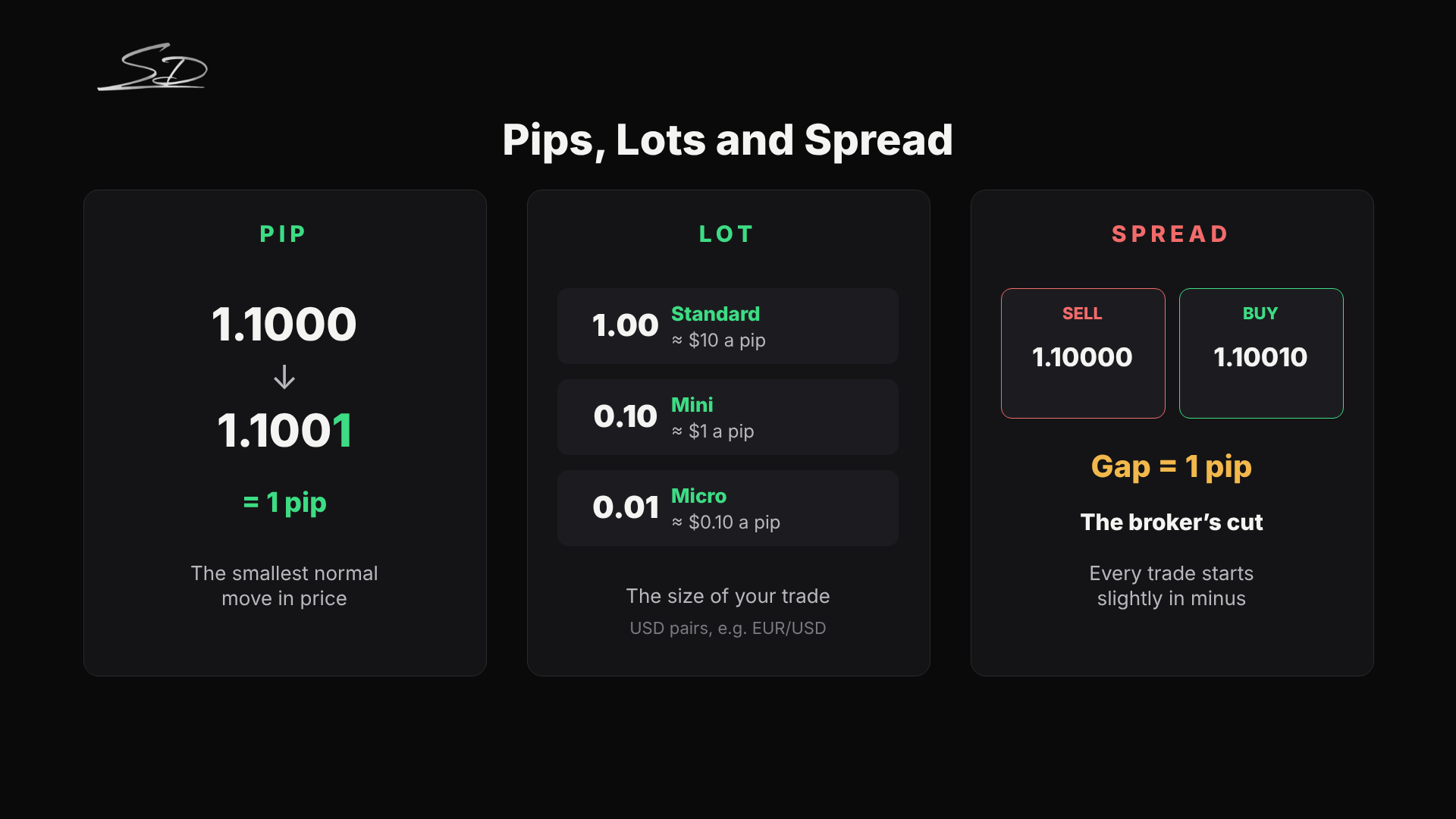
PIPS, LOTS AND SPREAD
Pip -> smallest normal price move -> 1.1000 to 1.1001 = 1 pip
Lot -> size of your trade
1.00 lot -> standard -> around $10 a pip on USD pairs
0.10 lot -> mini -> around $1 a pip
0.01 lot -> micro -> around $0.10 a pip
Spread -> gap between the buy price and the sell price -> the broker’s cut
Every trade starts slightly in minus because of the spread
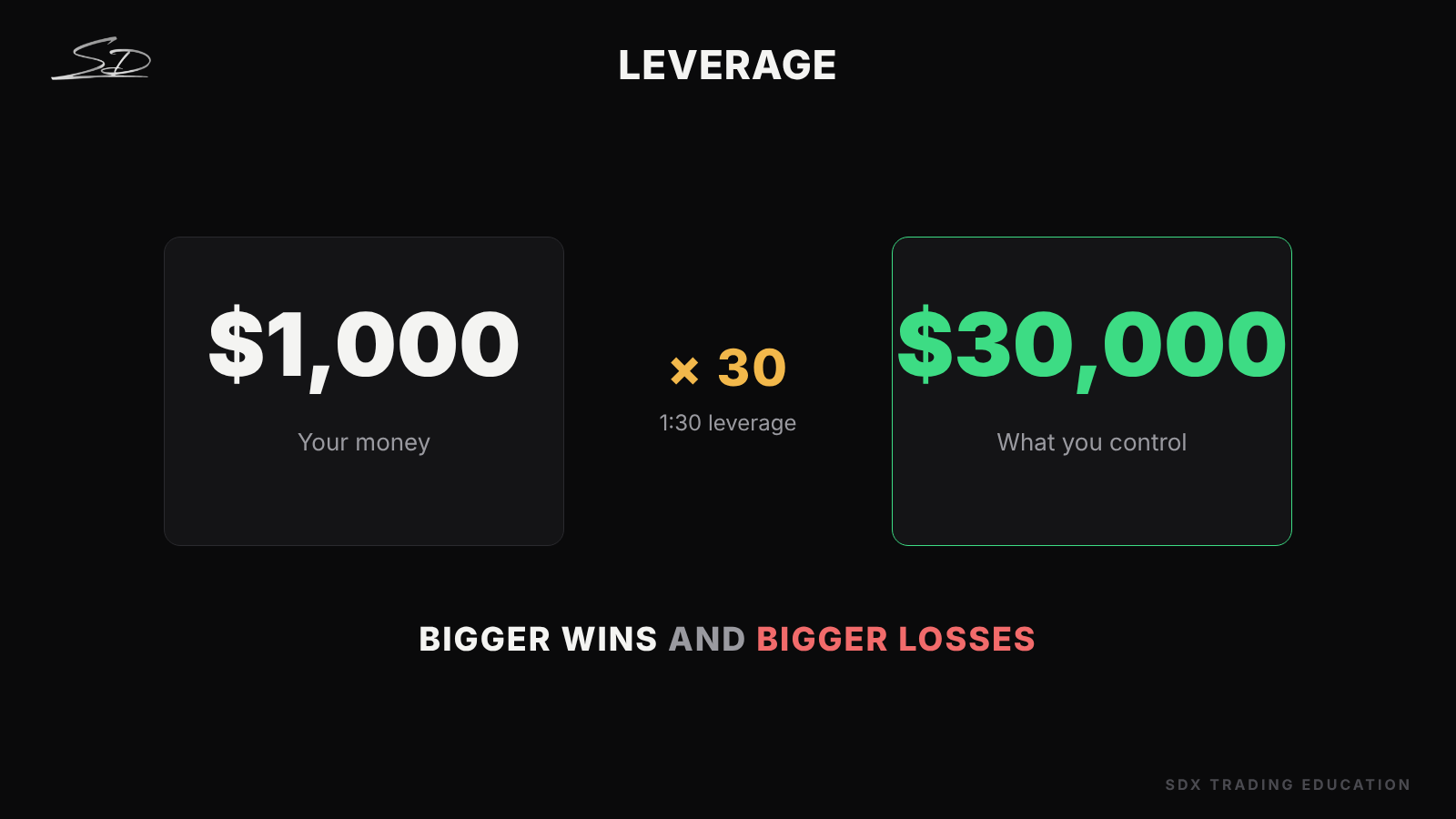
LEVERAGE
Leverage -> lets you control a bigger trade with less money
1:30 -> $1,000 controls $30,000
Bigger wins AND bigger losses
Leverage is a tool -> risk management is what keeps you safe
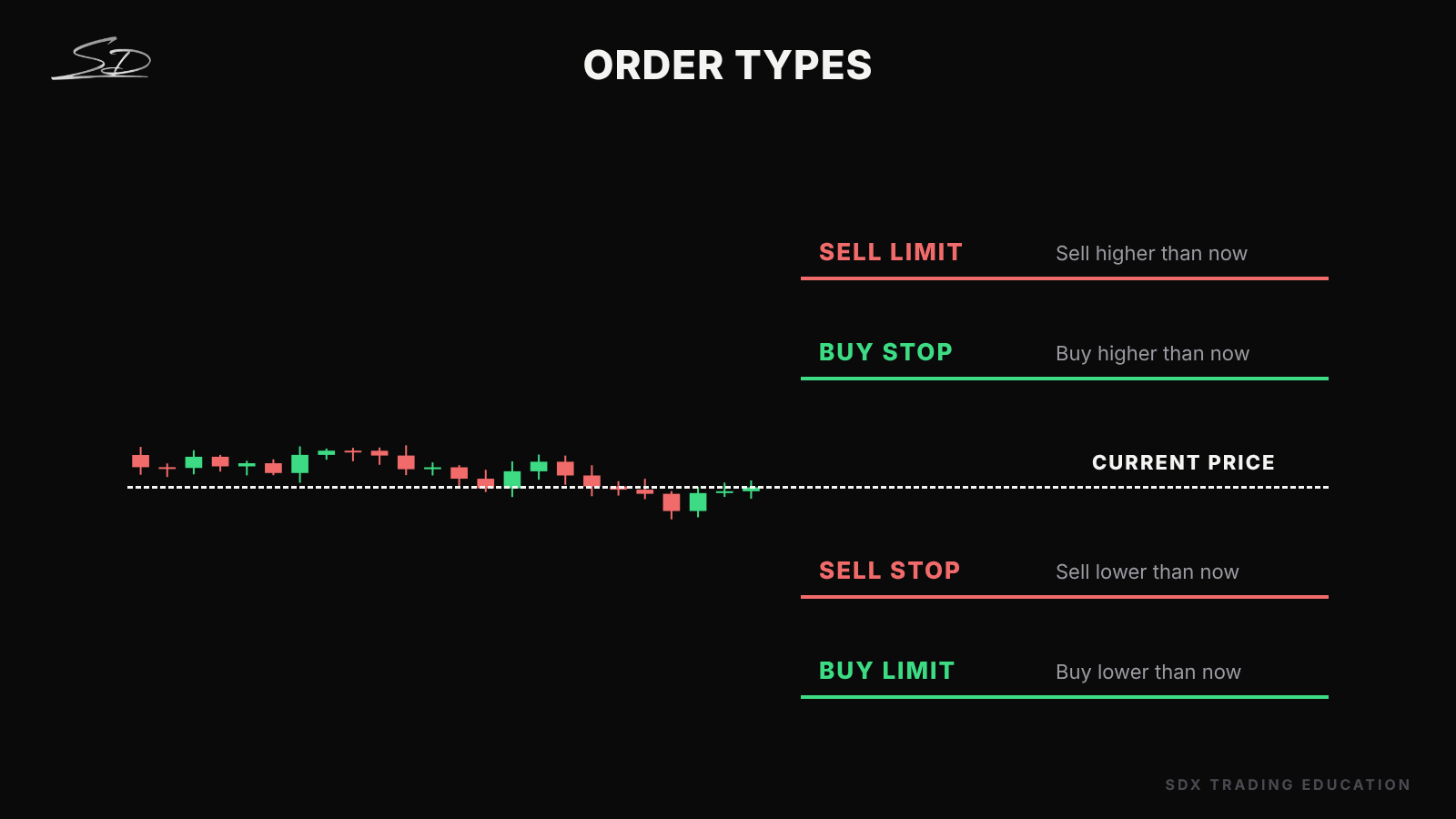
ORDER TYPES
Market Order -> get in now at the current price
Buy Limit -> buy lower than the current price
Sell Limit -> sell higher than the current price
Buy Stop -> buy higher than the current price
Sell Stop -> sell lower than the current price
STOP LOSS AND TAKE PROFIT
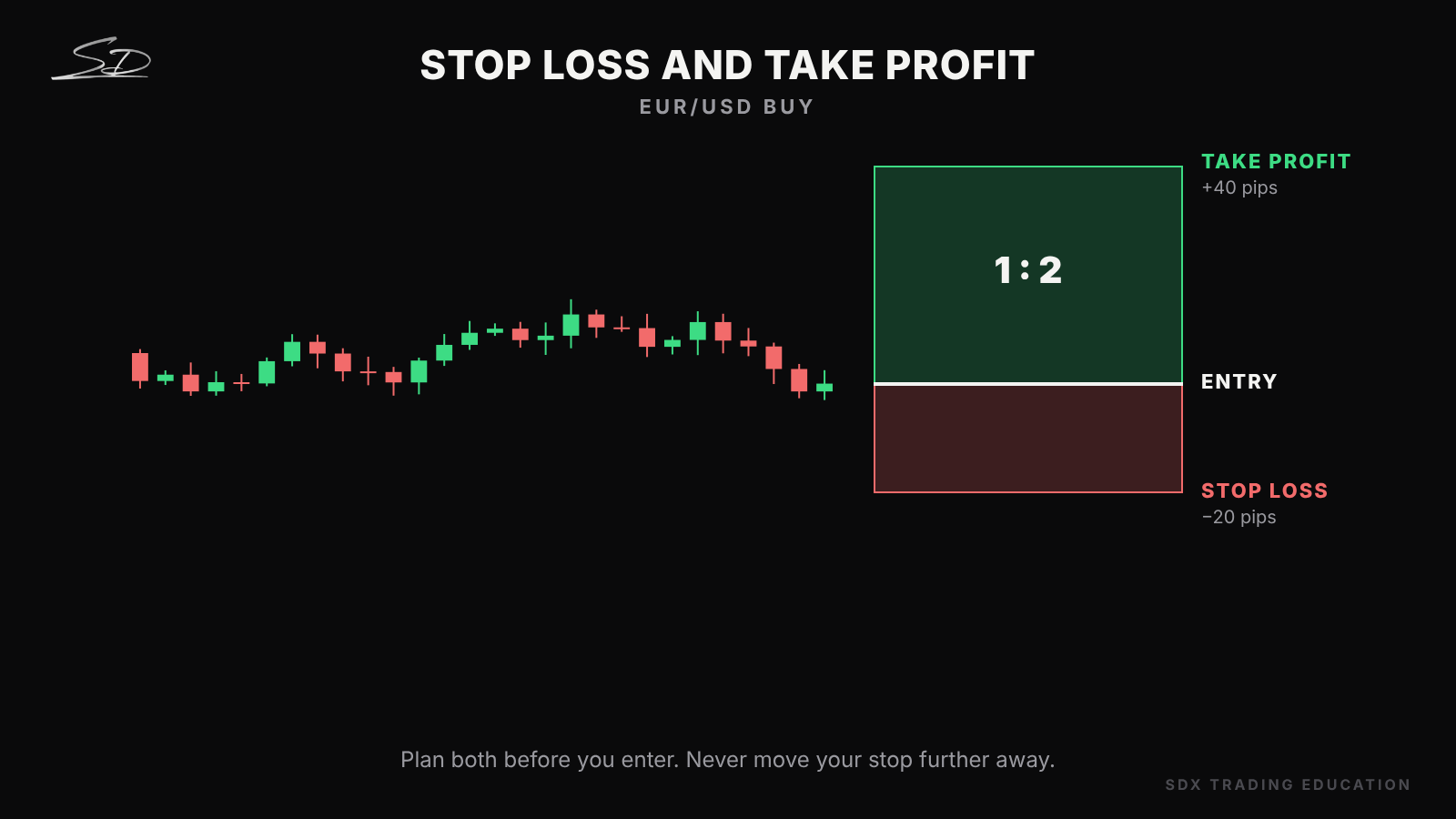
Stop Loss -> where you get out if you’re wrong -> EVERY trade has one
Take Profit -> where you get out and get paid
Plan both before you enter -> never move your stop further away
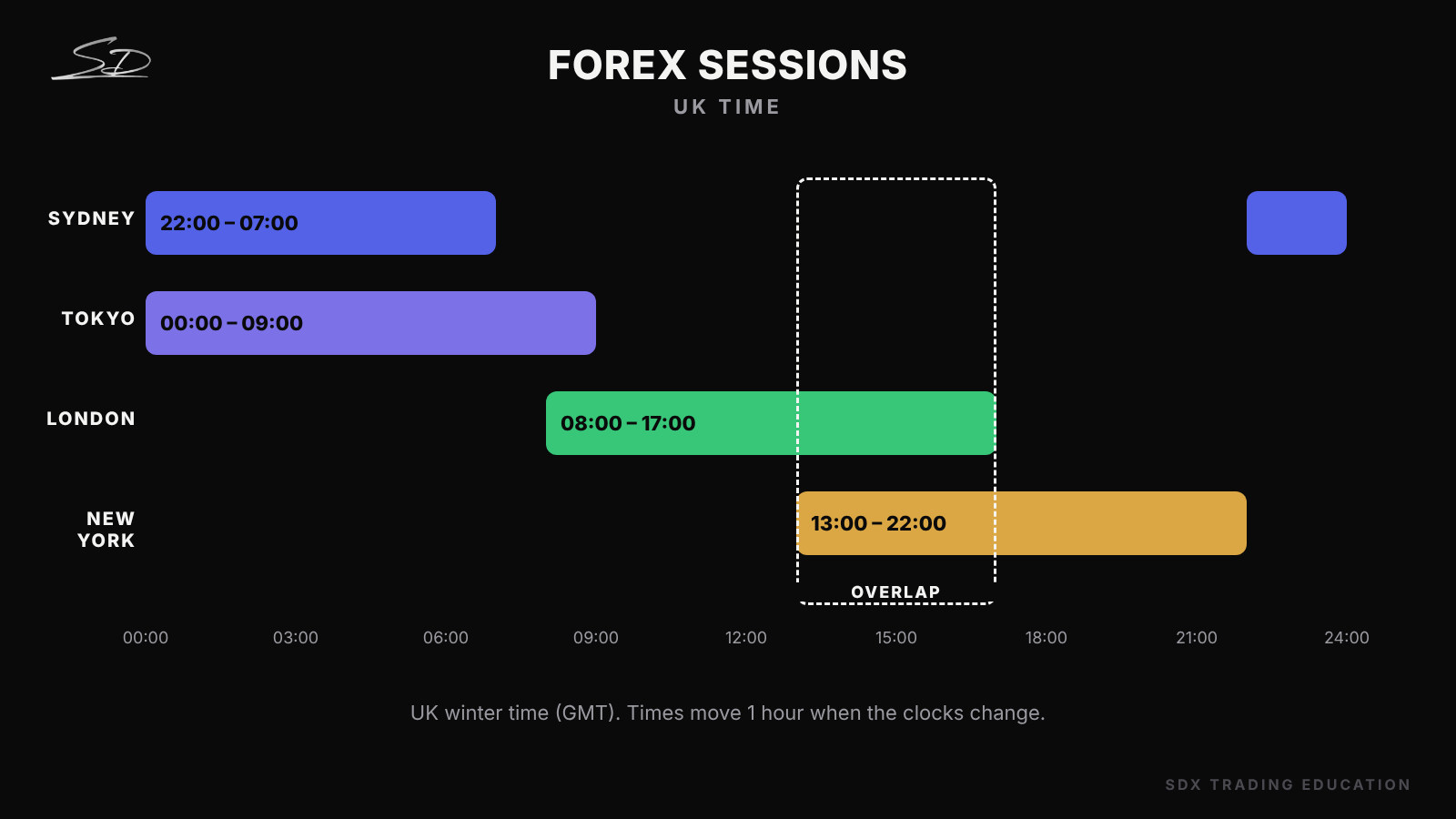
TRADING SESSIONS (UK TIME)
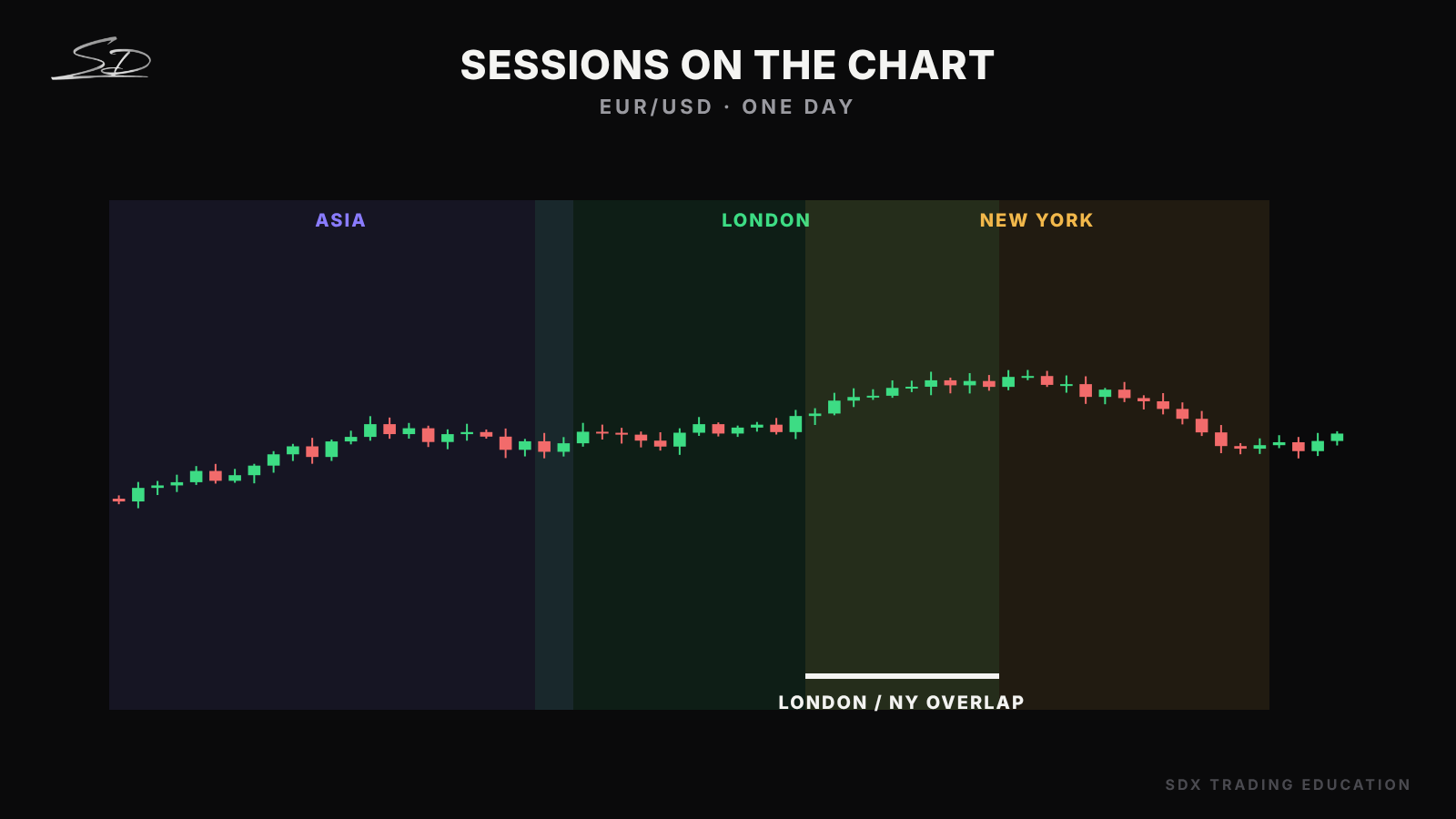
Asian Session -> roughly 12am to 9am -> quieter
London Session -> roughly 8am to 5pm -> big volume
New York Session -> roughly 1pm to 10pm -> big volume
London / New York overlap -> 1pm to 5pm -> most movement of the day
Exact times shift when the clocks change -> check your session indicator
TRADING STYLES
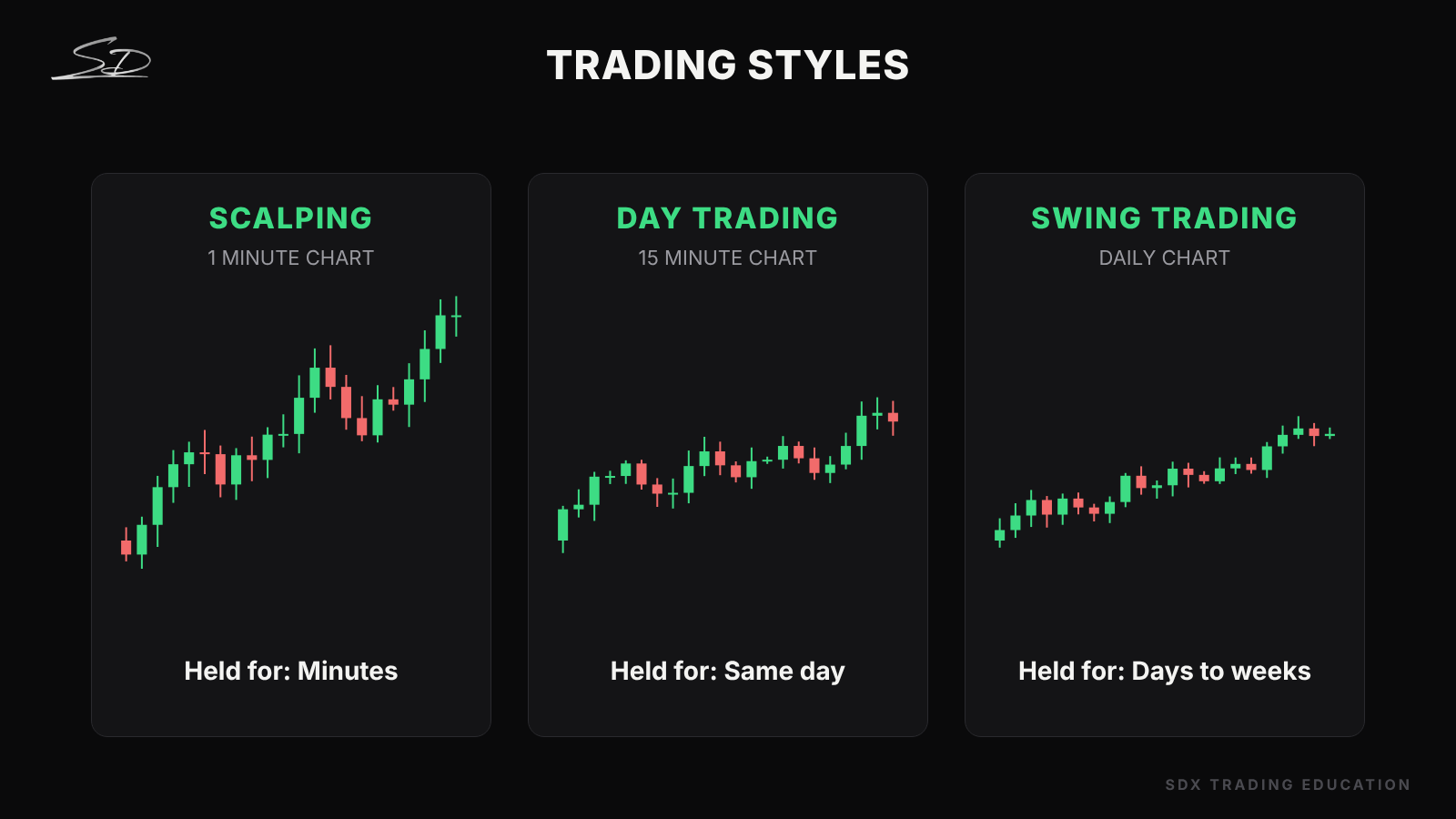
Scalping -> in and out within minutes
Day Trading -> trades opened and closed the same day
Swing Trading -> trades held for days to weeks
Pick the one that fits your life
RISK AND PSYCHOLOGY
Risk a small % of your account on every trade -> 1%
Losses are part of the business -> keep them small
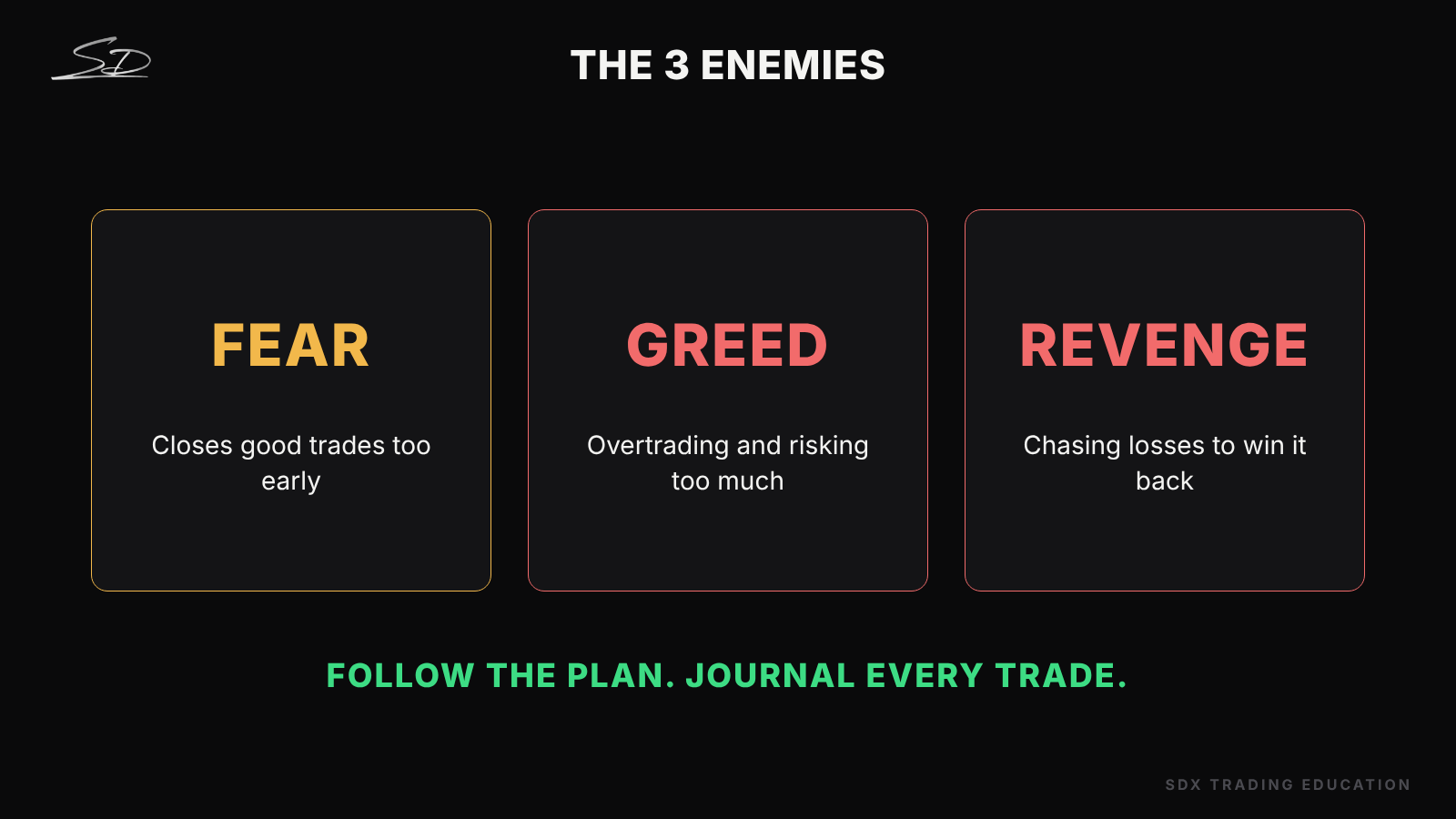
Fear -> makes you close good trades early
Greed -> makes you overtrade and risk too much
Revenge -> makes you chase losses
Follow the plan -> journal every trade